
Table of Contents
Introduction
Stand next to any truck weighbridge long enough and you’ll notice something. Nobody really asks how it works, until the reading starts looking wrong. That’s usually when the conversation turns to the weighbridge load cell, the small component buried under tonnes of steel that’s quietly doing all the actual measuring. Understanding the weighbridge load cell working principle isn’t just technical curiosity, it genuinely helps when something eventually needs fixing. At Gjimpex, we’ve built and repaired these for years, and trust us, most calls we get start with “it was working fine yesterday.” So let’s actually walk through this properly, what’s happening inside a weighbridge load cell, which type goes where, how installation and wiring should be done, and what to do when things go sideways.
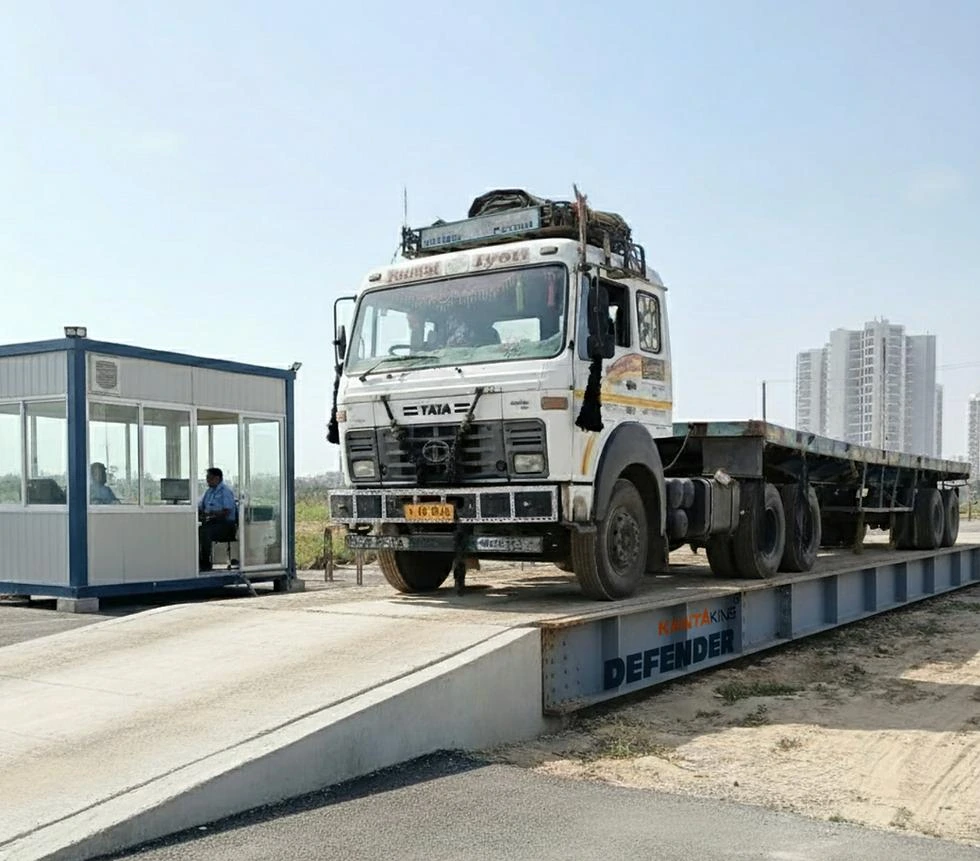
Inside a Load Cell What Actually Happens When a Truck Rolls On
Picture a loaded truck inching onto the platform. The moment its wheels settle, something inside the weighbridge load cell flexes. Not visibly. Not even close to visibly. We’re talking micrometres here, a deformation smaller than anything you’d notice with the naked eye.
Inside the metal body sits a strain gauge, bonded tightly to a carefully machined section of the cell. When weight presses down, that section bends just slightly, and the strain gauge stretches or compresses along with it. This changes its electrical resistance. Tiny change, yes almost nothing on its own. But that’s the whole trick of how a load cell works. It’s not measuring weight directly. It’s measuring a resistance shift caused by weight, and that shift is proportional, consistent, repeatable.Wheatstone Bridge Why This Circuit, Not Something Simpler
Here’s the part people skip over. A single strain gauge’s resistance change is too small to read reliably on its own, so engineers use four gauges arranged into what’s called a Wheatstone bridge circuit. Think of it as a balancing act, under no load, the bridge sits in equilibrium. Apply weight, and the balance shifts in a measurable, predictable direction. That shift becomes a voltage output, and that voltage is what travels down the cable to your indicator. This is the core of the weighbridge load cell working principle, resistance change, converted to voltage, converted to a number on your screen.
Could you use a simpler circuit? Technically. But you’d lose accuracy, and in commercial weighing, accuracy isn’t optional. It’s the whole point.Shear Beam, Compression, Double-Ended Which One Goes Where, and Why
Not every application calls for the same type of weighbridge load cell. And honestly, picking the wrong one is one of the more expensive mistakes we see clients make early on.
Compression type cells are the old guard, rugged, simple, built to take a direct vertical hit. You’ll still find them holding up older truck scales across India, especially in sites that haven’t been upgraded in a decade or more. They work. But they’re not always the most accurate option for modern commercial weighing.Why Most Indian Weighbridges Use Shear Beam Cells
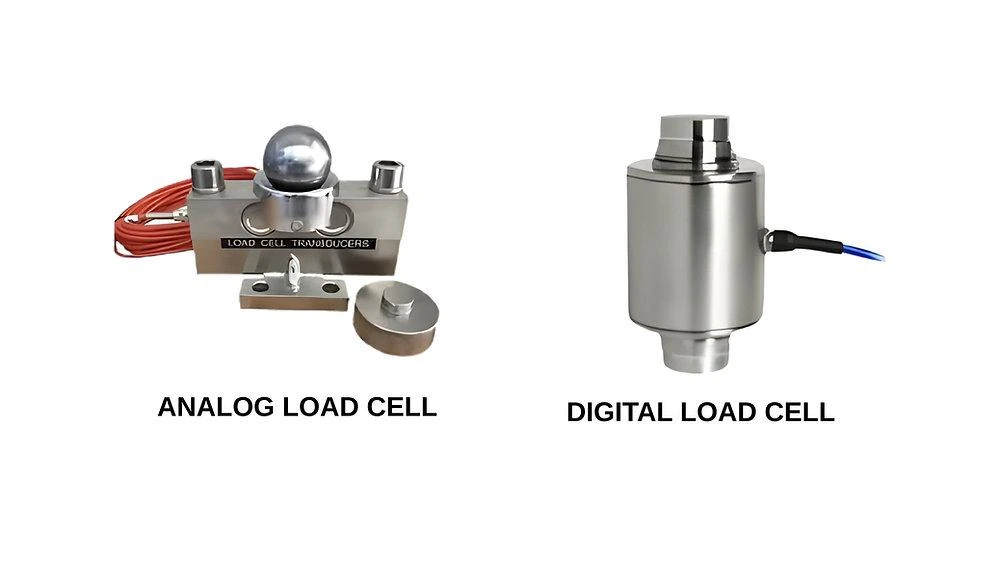
Analog vs Digital What Changes on the Ground, Not Just on Paper
Getting the Installation Right Lessons From the Field
We’ve walked onto sites where the civil work was rushed just to get the weighbridge “operational” a week earlier. Nearly every time, that decision comes back to bite later, usually as a calibration issue nobody can explain.
Proper weighbridge load cell installation starts well before the cell ever touches the platform. The foundation pit needs to be level, cured fully, built exactly to spec. A few millimetres off doesn’t sound like much. It is. Even small unevenness in the pit transfers directly into inconsistent readings down the line, and chasing that problem after the fact is expensive, frustrating, and avoidable.
Mounting and alignment matter just as much. Each cell has to sit squarely under its designated corner, taking load vertically. Not at an angle. An angled load introduces side forces the cell was never designed to measure, and over months, that shows up as slow, creeping drift in your readings, the kind that’s hard to diagnose because it doesn’t happen all at once.Self-Checking Load Cells and Why They're Becoming Standard
Wiring That Doesn't Fail in Monsoon Connection Practices That Matter
Here’s something that doesn’t get talked about enough. A weighbridge load cell connection has to survive Indian weather, not lab conditions. Monsoon humidity, temperature swings, years of vibration from heavy vehicles rolling across the platform daily. That’s a tall ask for wiring.
Each cell connects to a junction box, and in analog systems, a summing card combines all the individual signals into one output before sending it to the indicator. The junction box seal is non-negotiable. We’ve opened boxes that looked perfectly fine on the outside, only to find corroded terminals inside, quietly wrecking signal quality for months before anyone even noticed the readings had drifted.
Cable length matters too, more than people assume. Longer runs mean more signal loss in analog setups, one more practical argument in favour of digital. A weighbridge digital load cell signal doesn’t degrade over distance the same way raw analog voltage does, which genuinely helps on larger weighbridges with longer cable runs.Digital Networked Systems vs Traditional Analog Wiring
When a Weighbridge Starts Giving Wrong Readings
Reading Drift, Zero Error, Inconsistent Weights What Each One Tells You
Field Repair vs Sending the Cell Back to Manufacturer
Maintenance Habits That Extend Load Cell Life
Most of this comes down to small, boring habits nobody wants to prioritize until something breaks. Check junction box seals before monsoon hits, every year, without fail. Clear debris from under the platform regularly, it builds up faster than people expect. Schedule periodic calibration checks rather than waiting for a customer complaint to trigger one. Also keep an eye on load cell specification sheets when replacing a damaged unit, mismatched capacity or accuracy class causes more problems than people realize. None of this is glamorous work. But weighbridges that get this kind of routine attention simply last longer and drift less, and the maintenance cost is nothing compared to replacing a weighbridge load cell outright.
For a deeper look at upkeep schedules and genuine load cell manufacturer backed support suited to Indian industrial conditions, our team can walk you through a maintenance plan specific to your site.
Conclusion
Getting a weighbridge load cell right isn’t just about buying a component and bolting it in. It’s the working principle, the type suited to your platform, correct installation, weatherproof connection, and knowing what to do the day something inevitably drifts out of spec. Get any one of these wrong, and the rest struggle to compensate. If you’re setting up a new weighbridge or dealing with accuracy trouble on an existing one, talk to people who actually build and fix these for a living. Reach out to Gjimpex, built for exactly these ground realities.
FAQS
Usually it’s a grounding or wiring issue electrical noise entering the connection. Corroded junction box terminals are another common culprit, especially post-monsoon.
Depends on platform length and capacity, but most commercial truck weighbridges use between 6 to 10 cells, placed strategically to handle uneven axle loading.