
Table of Contents
Introduction
Choosing the right S type load cell manufacturers is important for businesses that depend on accurate weight and force measurement. Whether you are working with industrial weighing equipment, suspended weighing systems, material testing machines, or automated processes, the quality of the load cell can directly affect the accuracy and reliability of the complete system. A properly selected load cell helps maintain consistent measurements and supports smooth day-to-day operations.
S type load cells are widely used because they can measure both tension and compression forces and can be adapted to different industrial setups. However, not every manufacturer offers the same level of engineering, testing, calibration, and technical support. Reviewing the manufacturer’s capabilities helps ensure the selected load cell fits the equipment and operating conditions.
What Is an S Type Load Cell?
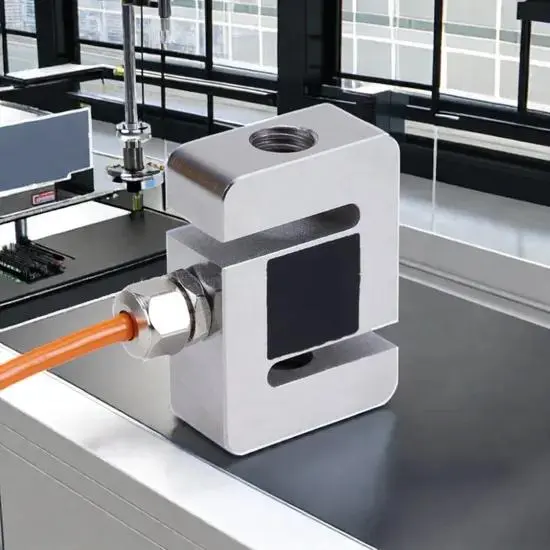
S type load cells feature an S-shaped sensing element that responds to the force applied during measurement. It generally uses strain gauges that detect small changes in the sensing element when a load is applied. These changes are converted into an electrical signal that can be interpreted by weighing indicators, controllers, or other compatible equipment.
Because of its design, an S type load cell can be used for both tension and compression measurement. This makes it useful in several industrial weighing and force measurement applications where reliable and repeatable readings are required.
How Does an S Type Load Cell Work?
The working principle of an S type load cell is based on strain gauge technology. When force is applied to the sensing element, the material undergoes a very small amount of deformation. Strain gauges attached to the sensing element detect this deformation and produce a corresponding electrical change.
The gauges are commonly arranged in a Wheatstone bridge circuit. The resulting electrical output changes according to the applied force and can then be processed by the connected weighing or measurement equipment. The quality of the sensing element, strain gauge installation, wiring, compensation, and calibration can all influence the final performance.
Why S Type Load Cells Are Important for Industrial Applications
In industrial environments, accurate measurement is essential for maintaining product quality, controlling processes, and avoiding measurement-related losses. S type load cells can provide a practical solution when an application requires measurement of tensile or compressive forces.
Their compact structure also allows them to be integrated into different types of equipment. Depending on the application, they can be used for suspended weighing, hopper systems, force testing, and industrial automation.
Some important advantages include:
- Suitable for tension and compression measurement
- Compact design for different installation arrangements
- Useful for industrial weighing and force measurement
- Available in different capacities and configurations
The actual suitability of a load cell depends on the complete mechanical setup. Proper selection and installation are therefore important for achieving dependable results.
Key Factors That Define a Reliable S Type Load Cell Manufacturer
When comparing S Type Load Cell Manufacturer options, businesses should first look at the manufacturer’s technical and production capabilities. A good manufacturer should understand the relationship between mechanical construction, strain gauge technology, electrical output, calibration, and the final application.
Manufacturing consistency is particularly important for precision measurement products. Small variations in machining, strain gauge bonding, assembly, or calibration can affect the performance of the finished load cell. For this reason, buyers should understand how the manufacturer controls quality during production.
It is also useful to check whether the manufacturer can provide technical specifications, calibration information, application guidance, and support when a customized solution is required. An experienced Industrial Load Cell Manufacturer should be able to discuss the application instead of simply recommending a product based on load capacity.
Importance of Accuracy and Calibration
Load cell performance depends not only on accuracy but also on repeatability and how well the sensor maintains its readings over extended use. An industrial load cell should give steady readings when the same load is applied under similar conditions.
Calibration helps verify the relationship between the applied force and the electrical output of the sensor. Proper calibration and testing can identify whether the product is operating within its specified parameters.
When evaluating S type load cell manufacturers, it is therefore useful to ask about calibration procedures, testing equipment, quality checks, and documentation. These factors can provide a better understanding of the manufacturer’s approach to product reliability.
Choosing the Right Load Capacity
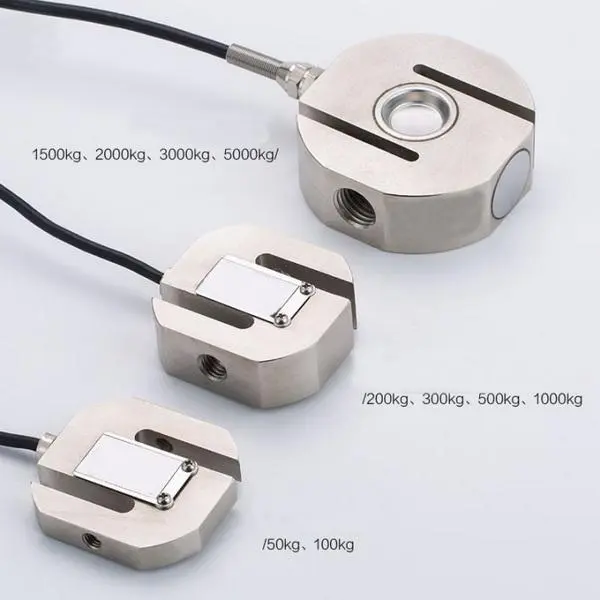
Choosing an appropriate capacity helps the load cell perform accurately under actual operating conditions. The load cell should be capable of handling the expected operating force while also considering possible dynamic loads, shock loading, and other conditions that may occur during operation.
Before selecting a model, businesses should understand the actual load conditions rather than choosing a capacity based only on the maximum weight mentioned in a general specification.
Consider these factors when selecting capacity:
- Determine the normal operating load.
- Consider possible dynamic or shock loads.
- Understand the required measurement accuracy.
- Ensure compatibility with the complete weighing system.
An experienced S Beam Load Cell Manufacturer can help evaluate these factors and recommend a suitable capacity based on the application.
Material and Construction Quality
The construction of a load cell has an important role in its durability and long-term performance. The sensing element must be capable of handling the expected mechanical forces while maintaining its designed measurement characteristics.
Manufacturing quality can also be affected by machining accuracy, strain gauge bonding, electrical connections, sealing, cable protection, and final assembly. These details may not always be visible from the outside, but they can have a significant effect on product reliability.
Environmental conditions should also be considered. Applications exposed to moisture, dust, vibration, temperature changes, or corrosive conditions may require an appropriate construction and protection level.
Customization and Technical Support
Industrial applications do not always follow a standard configuration. Some equipment may require a specific load capacity, mounting arrangement, physical dimension, cable length, electrical output, or other customized specification.
Working with a manufacturer that understands these requirements can make the selection process easier. The customer can provide details about the equipment, expected load, installation space, operating environment, and measurement requirements, allowing the manufacturer to recommend an appropriate configuration.
Technical support is equally important after installation. Assistance with wiring, mounting, calibration, troubleshooting, and product specifications can help users maintain the performance of their weighing system over time.
Common Applications of S Type Load Cells
S type load cells are used across a variety of industries where accurate force or weight measurement is required. Their ability to measure tension and compression makes them suitable for different mechanical arrangements.
They can be found in suspended weighing systems, hopper and tank weighing equipment, force measurement systems, material testing machines, industrial automation, and process equipment. The exact application depends on the required capacity, environmental conditions, mounting arrangement, and measurement accuracy.
For businesses exploring other weighing components, GJ Impex also provides products such as load cells, weighing scale transformers, weighing scale motherboards, crane scales, and analytical balances.
Why Choose S Type Load Cell Manufacturers in Ahmedabad?
Ahmedabad is an important industrial and manufacturing centre with businesses operating across engineering, machinery, automation, pharmaceuticals, chemicals, textiles, and other sectors. These industries often require dependable weighing and force measurement solutions for production and quality-control processes.
Businesses looking for S Type Load Cell Manufacturers in Ahmedabad should consider more than geographical location. Manufacturing expertise, product quality, calibration facilities, customization capabilities, technical support, and after-sales service should all be evaluated before making a decision.
A manufacturer that understands the customer’s application can provide more useful guidance than a supplier that only offers standard specifications. Clear communication about the load, installation conditions, accuracy requirements, and operating environment can help ensure that the selected load cell is suitable for the intended system.
Conclusion
Selecting the right S type load cell manufacturers is an important step when accuracy, consistency, and reliability are required in industrial weighing and force measurement. Factors such as load capacity, accuracy, calibration, construction quality, environmental conditions, customization, and technical support should all be considered before purchasing.
The right load cell is not simply the one with the lowest price or highest capacity. It should be properly matched to the application and supported by dependable manufacturing and technical expertise. If you are looking for reliable weighing components and load cell solutions, GJ Impex can help you explore suitable options based on your specific requirements. Contact Us to discuss your industrial weighing and load cell requirements.