
Weighing Scale: Types, Working, Applications & How to Choose the Right Scale

Table of Contents

Introduction

Every industry that deals with materials, products, or people relies on one basic instrument to make sure numbers are right: the weighing scale. From a shopkeeper billing vegetables by the kilogram to a pharmaceutical lab measuring milligrams of an active ingredient, this instrument quietly decides how much money changes hands, how safe a product is, and how efficiently a factory runs. If you are exploring weighing equipment for your business, this guide from Gjimpex walks you through how these instruments work, the different types available, where they are used, and how to pick the right one for your needs. Whether you are a first-time buyer or simply curious about the technology, understanding the basics will help you make a far more informed decision later on.
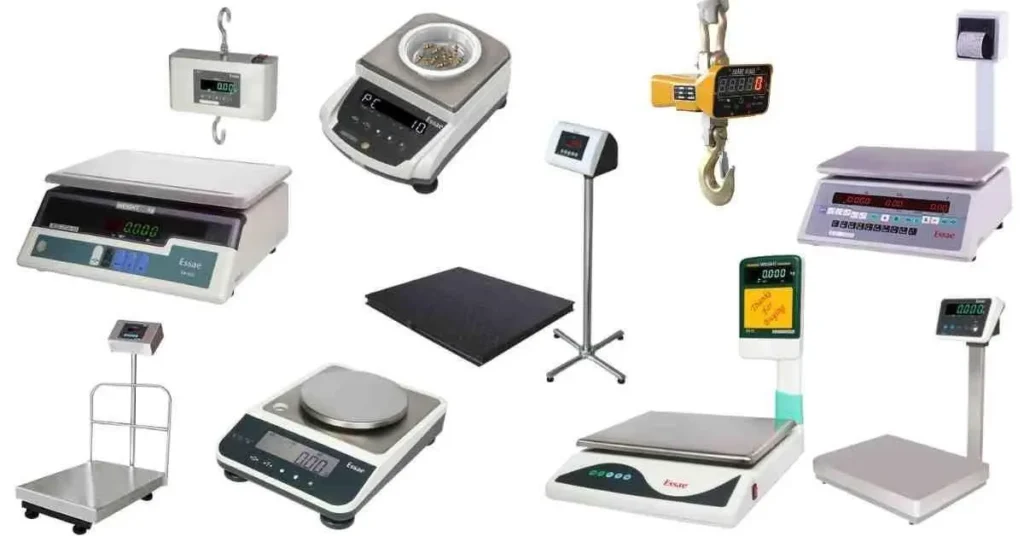
Weighing Scale

How Does a Weighing Scale Work? (Basic Working Principle)

At its core, every such instrument is built to convert a physical force, the pull of gravity on an object, into a readable number. The method used to do this conversion is what separates one type of scale from another, and it has evolved significantly over the last century.

Older mechanical designs used springs or a system of levers and counterweights. When an object was placed on the platform, the spring compressed or the lever arm shifted until it balanced against a known reference weight, and a needle or beam pointed to the corresponding measurement. This approach is simple, doesn’t need electricity, and is still found in some bathroom and shipping scales today, though it is generally less precise than modern alternatives.

Most scales manufactured today are electronic, relying on a component called a load cell. A load cell contains a strain gauge, a thin resistive element bonded to a metal body that deforms very slightly when weight is applied. This tiny deformation changes the electrical resistance of the gauge, and that change is converted into a voltage signal. The signal is then amplified, processed by an internal microcontroller, and converted into a digital reading shown on the display. This is essentially how an electronic weighing scale delivers fast, accurate, and repeatable results without any manual balancing.

Once the raw signal is captured, the internal electronics apply calibration factors, temperature compensation, and filtering to smooth out vibrations or drafts, before showing a stable final number. This is why a well-designed digital weighing scale can settle on an accurate reading within a second or two, even in a busy warehouse or retail counter.

Types of Weighing Scales

Weighing equipment is not a one-size-fits-all category, and browsing a wide range of weighing solutions quickly makes that clear. The right choice depends heavily on what is being weighed, how much precision is required, and the environment the scale will operate in.

Mechanical Weighing Scales

Mechanical scales use springs, levers, or counterbalances instead of electronics. They are valued for being rugged, unaffected by power cuts, and relatively low-maintenance, which is why they are still common in smaller shops, some agricultural settings, and older industrial units. Their main drawback is reduced precision compared to electronic alternatives, and they typically require manual reading of a dial or beam.

Digital and Electronic Weighing Scales

This category uses load cells and a digital display to give near-instant, highly accurate readings, and it is what most people picture when they think of modern weighing equipment. These units often include additional features such as tare functions, unit conversion, data connectivity, and memory for storing frequent weights. Because of their accuracy and convenience, this type of weighing machine has become the standard choice across retail counters, laboratories, warehouses, and manufacturing lines.

Specialized and Industrial Weighing Scales
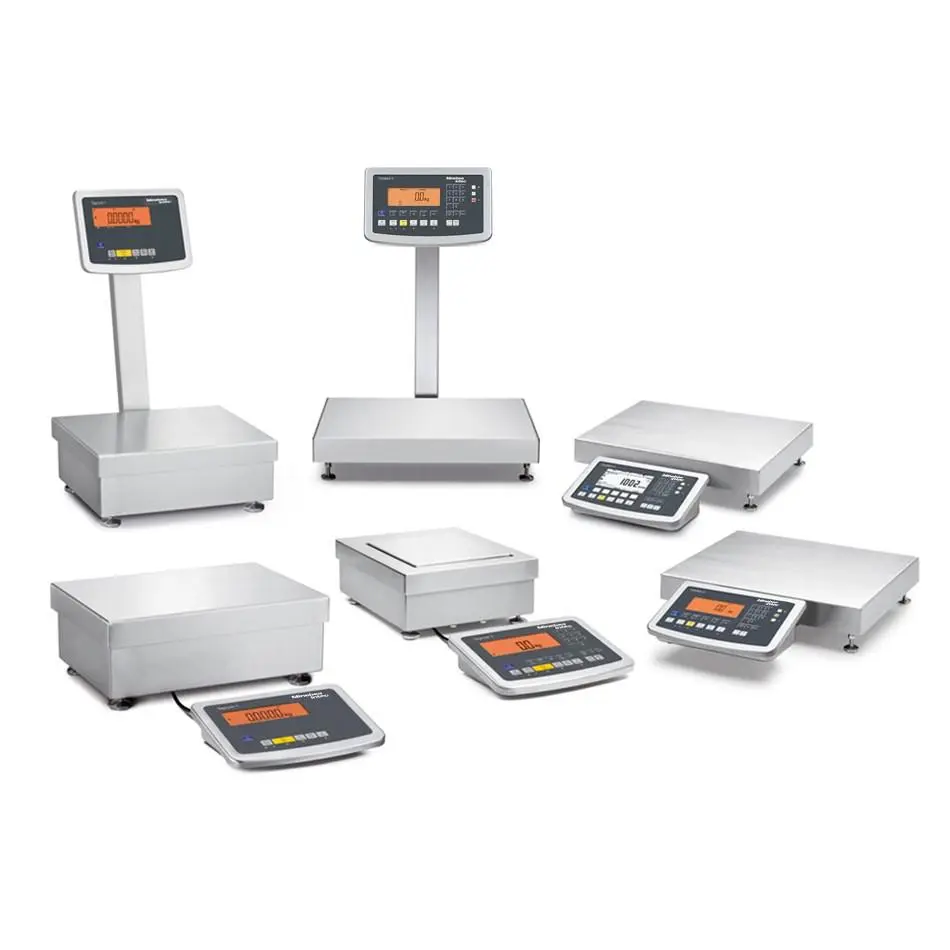
Beyond the basic mechanical-versus-digital divide, several purpose-built variants exist. Platform scales handle bulky goods and pallets; bench scales suit smaller parcels in a workshop setting; crane or hanging scales weigh suspended loads in logistics yards; weighbridges measure entire trucks and containers; and precision or analytical balances measure tiny quantities down to fractions of a gram in laboratories. An industrial weighing scale is generally built with a rugged frame, higher load capacity, and protection against dust, moisture, or impact, since it is expected to perform reliably in demanding production environments. A commercial-grade unit, by contrast, is typically designed for retail counters and billing counters, balancing accuracy with ease of use for everyday transactions.
Types of Weighing Scales

Applications of Weighing Scales Across Industries

The reach of weighing technology, including reliable load cells and weighing systems, goes far beyond the kitchen or the local grocery store. In manufacturing and industrial settings, scales monitor raw material intake, batching, and finished goods dispatch, directly affecting production efficiency and cost control. Retail and commercial businesses depend on accurate billing scales to charge customers fairly and comply with legal metrology rules. In healthcare and laboratories, precision balances measure dosages, samples, and patient body weight, where even a small error can have serious consequences. Logistics and warehousing operations use platform scales and weighbridges to verify shipment weights, calculate freight charges, and prevent overloading of vehicles. Agriculture relies on scales for weighing grain, livestock, and feed, while households use simple digital scales for cooking, fitness tracking, and postal purposes.

Accuracy, Precision, and Calibration Explained

Accuracy and precision are often used interchangeably, but they describe two different qualities. Accuracy refers to how close a measured value is to the true weight of an object, while precision refers to how consistently a scale produces the same reading when the same object is weighed repeatedly. A scale can be precise without being accurate if it consistently gives a reading that is off by the same margin every time, which is usually a sign that calibration is overdue. Calibration is the process of adjusting a scale against a certified reference weight so that its readings match the true value within an acceptable tolerance. Environmental factors such as temperature swings, dust accumulation, or physical shocks during transport can all cause a scale to drift out of calibration over time. For businesses, especially those in trade, healthcare, or food production, regular calibration is not just good practice but often a legal requirement under regional legal metrology and trade certification rules, since an uncalibrated scale can lead to billing disputes, regulatory penalties, or safety risks.

Factors to Consider When Choosing the Right Weighing Scale

Selecting the right instrument means matching its specifications to the actual job it needs to do, rather than simply picking the cheapest or most feature-rich option available.

Capacity, Accuracy, and Platform Size

The first question to answer is how much weight the scale needs to handle and how fine the readability needs to be. A jewellery business needs milligram-level precision on a small pan, while a logistics company needs a platform rated for several tonnes. Buying a scale with far more capacity than required often sacrifices fine readability, while undersizing risks damaging the load cell through repeated overload.

Environment and Power Source

Where the scale will be used matters just as much as what it will weigh. A weighing machine placed in a humid warehouse or an outdoor yard needs a rugged, often IP-rated enclosure, whereas a laboratory balance can be more delicate since it operates in a controlled indoor setting. Power source is another practical consideration: battery-operated units offer portability for field use, while mains-powered scales suit fixed billing counters and production lines that run continuously.

Certification and Compliance Needs

For any business use involving trade, billing, or regulated industries, checking whether a scale carries the appropriate legal metrology certification is essential,the team at Gjimpex can help you verify this before you buy. A certified commercial weighing scale protects both the buyer and the seller from disputes and ensures the equipment is legally usable for commercial transactions. Buyers dealing with export or multi-region operations should also confirm the scale complies with the relevant weights and measures standards for each market it will be used in.

Common Mistakes to Avoid When Using a Weighing Machine

Even a high-quality unit can give unreliable readings if it isn’t used correctly. Placing a scale on an uneven or vibrating surface is one of the most frequent errors, since it throws off the internal balance point and produces inconsistent numbers. Skipping routine calibration is another common oversight; businesses often assume a digital display is automatically accurate, when in reality every scale needs periodic verification against a reference weight. Overloading a scale beyond its rated capacity, even briefly, can permanently damage the load cell and compromise all future readings, so it’s worth checking the maximum rating before placing heavy or bulky items on the platform.

Future Trends in Weighing Technology

Weighing technology is steadily becoming smarter and more connected. IoT-enabled scales can now transmit weight data directly to inventory or billing software in real time, reducing manual entry errors and speeding up operations in warehouses and retail chains alike. Some newer systems are also experimenting with predictive calibration, using software to flag when a unit is likely to drift out of tolerance before it actually causes a measurement error, cutting down on unplanned downtime. As automation spreads across manufacturing and logistics, expect weighing instruments to increasingly integrate with broader digital systems rather than operating as standalone devices.

Conclusion

Choosing the right weighing scale ultimately comes down to understanding your specific requirements: the capacity you need, the environment the equipment will work in, and the level of accuracy your business or application demands. Whether you’re comparing a simple mechanical unit against a modern electronic scale, or trying to decide between a heavy-duty industrial unit and a lighter commercial model for a retail counter, matching the equipment to the actual use case will save both money and future headaches. If you’d like expert guidance on selecting load cells, weighing machine components, or complete weighing systems for your business, get in touch with the team at Gjimpex, they can help you find a solution that fits your exact needs.

Leave a Comment

Your email address will not be published. Required fields are marked *

Scroll to Top