
Table of Contents
Introduction
Every weighing system you see in a warehouse, factory, or lab is built from small parts that work together as one unit. These parts decide how accurate, durable, and reliable the whole system will be. That is why finding the right weighing scale components manufacturer becomes so important for any business that depends on weight-based operations. Whether you run a logistics hub in Bhiwandi or a chemical plant in Taloja, the quality of these components directly affects your daily output.
In this guide, we will walk you through what these components are, how they work, what to look for while buying, and why Mumbai has become a strong base for weighing technology in India.
What Are Weighing Scale Components?
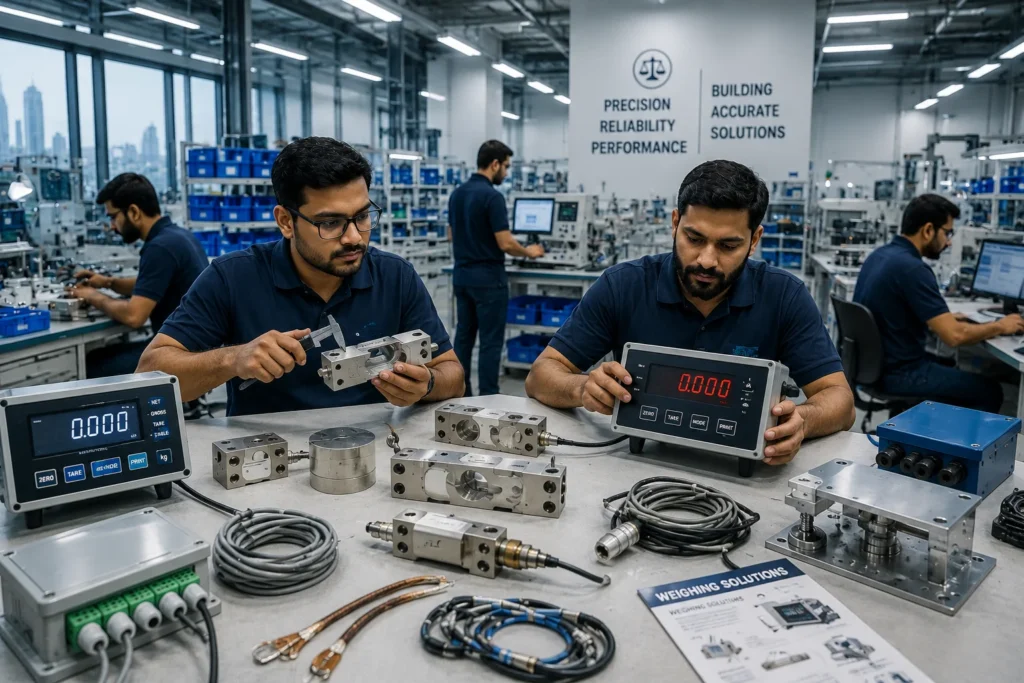
Weighing scale components are the individual parts that come together to form a complete weighing system. These include load cells, indicators, junction boxes, displays, mounting kits, and cables. Each part has its own job. The load cell senses the weight, the junction box collects signals, the indicator shows the reading, and the cables and mounts hold everything in place.
When even one component is of poor quality, the whole system suffers. Wrong readings, frequent breakdowns, and short lifespan become regular problems. This is why industries always look for trusted partners who can supply matching parts that work together smoothly without compatibility issues.
Essential Components of a Weighing System
Load Cells
The load cell is the heart of any weighing scale. It is a sensor that converts force into an electrical signal. Different industries need different types: S-type for tension applications, single point for small platform scales, shear beam for heavy floor scales, and compression load cells for tank and silo weighing. The accuracy class, capacity, and material all play a role in choosing the right one.
Weighing Indicators
Junction Boxes and Summing Cards
Cables, Mounts, and Accessories
How Weighing Components Are Manufactured
Building a reliable load cell is not a simple job. It starts with selecting the right material, usually stainless steel or alloy steel for industrial use and aluminium for lighter applications. Strain gauges are then carefully bonded to the metal body using special adhesives. After bonding, each unit goes through temperature compensation, where the load cell is tested across different temperatures to make sure it gives the same reading in heat or cold.
A trusted weighing scale components manufacturer will also do overload testing, sealing checks, and final calibration before packing. These steps add time, but they are what separates a long-lasting industrial component from a cheap replacement that fails in months.
Quality Standards and Certifications That Matter
Buyers should always check what standards a component follows. OIML R60 is the international benchmark for load cells, and it defines accuracy classes like C3, C4, and C6. The higher the class, the better the precision. For hazardous areas like petrochemical plants, ATEX or IECEx certification is needed. For wet and outdoor environments, IP65, IP67, and IP68 ratings show how well the component is protected against dust and water.
A reliable weighing scale components manufacturer will provide test certificates with full traceability, often backed by NABL-accredited calibration. This makes audits easy and gives confidence to your quality team during inspections.
Industries in Mumbai That Depend on Weighing Components
Mumbai and its surrounding belt, Navi Mumbai, Thane, Bhiwandi, Taloja, and Panvel, host some of the largest industrial clusters in India. Logistics and warehousing companies use weighbridges and platform scales to manage truck movement near JNPT port. Pharmaceutical and chemical plants use precision indicators and load cells for batch control and packing lines. Food processing and dairy units depend on hygienic weighing parts that resist moisture and cleaning chemicals.
Cement, steel, and construction firms across Maharashtra rely on heavy-duty compression load cells for silo and hopper weighing. Even retail and trading businesses use small platform scales built from the same family of components. This wide range of industries is why a strong weighing scale components manufacturer base has grown in and around Mumbai.
Why Mumbai Is a Strong Hub for Weighing Technology
Mumbai is not just India’s financial capital; it is also a serious industrial center. Areas like MIDC Andheri, Taloja, Bhiwandi, and Turbhe have hundreds of engineering and electronics units. The city offers easy access to skilled labor, raw materials, and shipping routes through JNPT and Mumbai Port. For any weighing scale components manufacturer, this means faster sourcing, easier exports, and a strong local customer base.
The presence of so many user industries in one region also helps. Direct feedback from real factories keeps product design sharp and practical, not just theoretical.
Key Features to Look for When Buying Weighing Components
When choosing parts for your weighing setup, focus on more than just price. The most important things to check include:
- Accuracy class (C3 for general use, C6 for high-precision needs)
- IP rating matching your environment (IP67 or IP68 for outdoor and washdown use)
- Capacity and overload limit suitable for your load range
- Output type (analog mV/V, digital RS485, or wireless)
- Operating temperature range for your site conditions
- Compatibility between load cell, junction box, and indicator
Skipping any of these checks can lead to expensive mistakes later.
How to Choose the Right Weighing Scale Components Manufacturer
The first thing to look for is in-house manufacturing. A genuine weighing scale components manufacturer will have their own production unit, design team, and testing lab, not just an office that re-labels imported goods. Visit the facility if possible, or ask for a virtual tour. Check how they test load cells, what calibration weights they use, and whether their lab is NABL accredited.
Next, look at customization. Industrial buyers often need slight changes, different cable lengths, custom mounting, or special output. A good supplier will be open to these requests without long delays. Service is another big factor. Even the best components need support over time, and a quick response from the weighing scale components manufacturer makes a real difference when a production line is stuck.
Also check industry references. A company that already serves pharma, food, logistics, and cement clients across Mumbai and Maharashtra has clearly passed real-world tests. Documentation, warranty terms, and spare parts availability should all be confirmed in writing before you place an order.
Common Mistakes Buyers Should Avoid
Future of Weighing Scale Components
Why Gjimpex Is a Trusted Name in Mumbai and Beyond
When you search for a dependable partner, Gjimpex stands out as a respected weighing scale components manufacturer serving industries across Mumbai, Maharashtra, and the rest of India. With years of hands-on experience in load cells, indicators, junction boxes, and complete weighing solutions, Gjimpex combines strong engineering with friendly customer support.
Every product is built to meet international standards and is backed by proper calibration, clear documentation, and responsive after-sales service. From small platform scales to heavy industrial weighbridges, Gjimpex supplies parts that work reliably day after day. As a customer-focused weighing scale components manufacturer, the team understands that your production cannot wait, and they deliver accordingly.
Conclusion
If you are planning a new installation or want to replace aging components, this is the right time to talk to the experts. Visit Gjimpex today for expert advice, transparent pricing, and weighing parts built for Indian industrial conditions. Build your weighing system on the foundation of quality, trust, and lasting performance.